
The Burmese Harp
- Daniel Warriner
- 3月31日
- 読了時間: 2分

更新日:4月4日

The Burmese Harp (ビルマの竪琴, 1956) is a Japanese anti-war film directed by Kon Ichikawa and based on a children’s novel of the same name by Michio Takeyama. It opens at the end of World War II, with a group of weary Japanese soldiers traversing the Burmese landscape. One plays a harp (saung), to which the others sing. They arrive at a village where the locals welcome them with food and shelter, but after the meal the villagers quietly slip away, and the soldiers realize that British and Indian forces in the forest have surrounded them. The Japanese begin to sing, hoping to conceal their awareness—but the British join in, and for a brief moment both sides sing together before the Japanese learn that the war has ended.
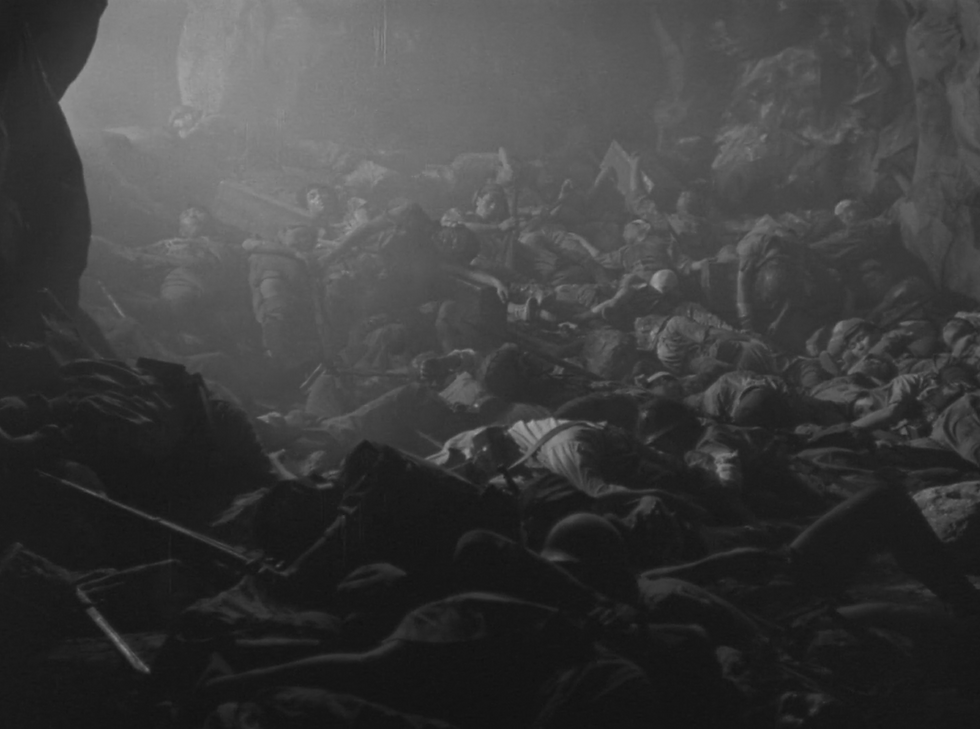
Private Mizushima, the harpist, is sent to persuade another Japanese battalion to lay down their arms and leave the hillside cave where they’ve taken refuge. He fails when the commander refuses to believe him, assuming it must be an enemy ruse; after all, the Japanese would never surrender. The British resume their bombardment, and Mizushima is left for dead on the rocky slope.
Captain Inouye and the rest of Mizushima’s unit are taken to a POW camp in Mudon and soon come to believe that their comrade has perished. But later, while crossing a bridge, they pass a man who—though dressed as a Burmese monk—bears a striking resemblance to Mizushima. Could it be him?
The film is both beautifully shot and compellingly told. Ichikawa remade it in color in the 1980s; he had originally wanted to shoot the first version in color as well, but decided against it due to the difficulty of transporting equipment in Burma. Much of the film was shot in Japan, but the Burmese scenes stand out for their scale and cultural texture, and may be among the earliest filmed there. It was nominated for an Academy Award for Best Foreign Language Film in 1957 and is also one of the earliest Japanese postwar films to foreground a pacifist theme. While it doesn’t address Japanese wartime atrocities in the region (it’s been suggested Ichikawa may not have been fully aware of them at the time), it does reflect Japan’s emerging postwar ethos, with a Buddhist ideal of altruism underpinning the narrative.




コメント