top of page

Updated: May 17, 2022


ree

I have to be in a certain mood to watch and enjoy horror—a mood that seems to lift after the period between summer and Halloween. And so early December wasn't the right time to watch The Terror: Infamy. But intrigued as I was, I couldn't wait to dig in—parts set in a Japanese internment camp in California in the 1940s, a yurei dishing up the "terror," and its ten episodes spanning the years of WWII as well as pre- and post-war events. A globetrotting story, jumping around the U.S. to fishing boats, war-ravaged Pacific island jungles, and Mexico. Altogether a unique blend of locations, myths, cultures, and genres set within the context of actual historical events. What's more, I'd seen The Terror (2018) earlier this year and it was excellent.


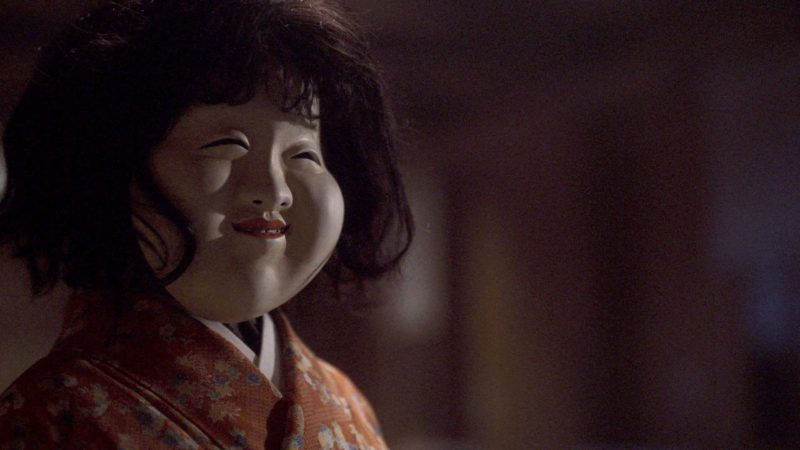
But alas, Infamy didn't provide what I'd been hoping for. There were a few good and better than good bits. The whole thing, though, felt unnecessarily stretched out, particularly towards the end, which was mostly silly and absurdly sentimental in some scenes. There are spooky and spine-chilling moments in the series, as well as gore. And Kiki Sukezane's performance stood out—the hopeful-then-mournful mother who becomes an unstoppable spirit of the sanguinary sort. The only great episode was #6 "Taizo" in which the ghost, Yuko, finds herself in the picturesque afterlife realm of her ancestors. She must avoid standing on the gravel of the zen garden, lest she be pulled down into it and the earthy hell lying in wait beneath. The episode is vivid and captures some of the essence—the eeriness and terror—of traditional Japanese ghost stories as it uncomfortably blends this world with the next.


ree

ree

ree

ree

ree

ree

ree

ree

ree

ree

Updated: May 17, 2022


ree

When We Were Orphans (2000), Kazuo Ishiguro's fifth novel, has been called the author's weakest work, and I heard that he's admitted this himself to some degree, perhaps in an interview. That said, he's such an incredibly capable storyteller that his "worst novel" would be more appropriately labeled as his "least best."


I do agree, though, that this isn't as good as his others. It felt too long in places and could've benefited from some editing to slim these parts down. At times I really enjoyed it, as much for Ishiguro's brilliant descriptions as for the story itself. He's extraordinarily astute when it comes to describing particular scenes and human nature, choosing the precise language, as Dickens would, to capture the very essence or nuance of something or someone.


I got the feeling Ishiguro didn't know exactly where he was going about two-thirds of the way through. The book follows detective Christopher Banks as he tries to solve the mystery of his parents' disappearance, which occurred during his childhood in 1930s Shanghai. From London he eventually returns to Shanghai, areas of which the Japanese at this point are regularly bombing. There he tries to track down those who may know what happened to his folks. He suspects they got caught up in the opium trade and were kidnapped by a warlord and have for years been locked up in a house. And this part, towards the end, didn't make much sense to me. Banks being so sure that his parents would still be in that house after so many years was implausible. And why did Ishiguro devote so many pages to Banks' seemingly endless search for that house? It felt as though the narrator or author had become distracted from telling the actual story. But to end on a positive note, I think the first half of the book is excellent, and the last fifty pages or so are good too, and whatever makes the other parts disappointing does not make the book anything less than a pretty good read.

Updated: May 17, 2022


ree

The Story of the Last Chrysanthemum (残菊物語, or Zangiku Monogatari) is a 1939 film by director Kenji Mizoguchi. Running about 140 minutes, it's longer than many of his other pictures, and so we get a wider, fuller experience of the major themes Mizoguchi is known for: patriarchal Japanese society; women's roles as the harlot and/or the mother, and to a lesser extent as the sister and/or the lover; sacrifice (that of Japanese women particularly, in the 1800s and early 20th century), and poverty as a catalyst for self-sacrifice and for the degeneration of morals and values. This film also shows the world of theater as it once was, and the sacrifice here is that of a woman for a male actor who has a ways to go before he can achieve anything like artistic greatness. Also different from other Mizoguchi films is that he didn't use any close-ups in this one. Its frequent long takes and traveling shots as well as the rich mise-en-scène also give Last Chrysanthemum a unique feel by comparison.


Set in Tokyo and Osaka in the 1880s, Last Chrysanthemum is centered on stage actor Kikunosuke Onoe (Shōtarō Hanayagi), the adopted son of a renowned Kabuki actor. While everyone praises the young Kikunosuke to his face, they criticize his feeble acting behind his back. But not Otoku (Kakuko Mori), a wet-nurse at Kikunosuke's father's house. She tells him that basically he sucks. This she does so he won't fall prey to self-delusion or conceit. She wants him, rather, to work hard towards his success. And he quickly falls in love with her for her honesty and true-blue devotion.


Otoku is promptly fired, and after several spurts of family drama from both families, the young lovers eventually leave Tokyo to be together. Later, on the road, Kikunosuke and especially Otoku suffer a number of hardships and indignities. Their travelling troupe even gets booted from a venue by a new act in town: butch female wrestlers in kimonos. Eventually Kikunosuke gets his chance to show off the acting skills he's developed and refined on the road, largely thanks to Otoku's support. The fans love him. Other actors laud his newfound talent. He can now return to Tokyo and probably recoup the respect of his father. Otoku, though, is unwell. She's happy, of course, that Kikunosuke has finally made it, but we know she herself will not make it, for she's given herself wholly to Kikunosuke who, at the end, stands godlike on a parade float, posing for his hordes of new fans, while Otoku lies in her deathbed.


Since it's longer, there's plenty to see. Many of the scenes are crammed with either theater paraphernalia or household elements. The kabuki scenes were a treat, as I hadn't seen theater filmed by Mizoguchi before. The various experimental camera angles and travelling shots, from one room to the next or one shop to the next, remarkably fill out the world depicted. Finally, the narrative feels thicker than the stories of some of his other films of the time, such as The Downfall of Osen (1935) and The Water Magician (1933), both similar in that the woman sacrifices herself for the success of the male. This "thickness" is likely the result of Mizoguchi spending more time fleshing out the lead male and female characters and the more nuanced portrayal of the drama unfolding between and around them.


ree
ree
ree
ree
ree
ree
ree

bottom of page